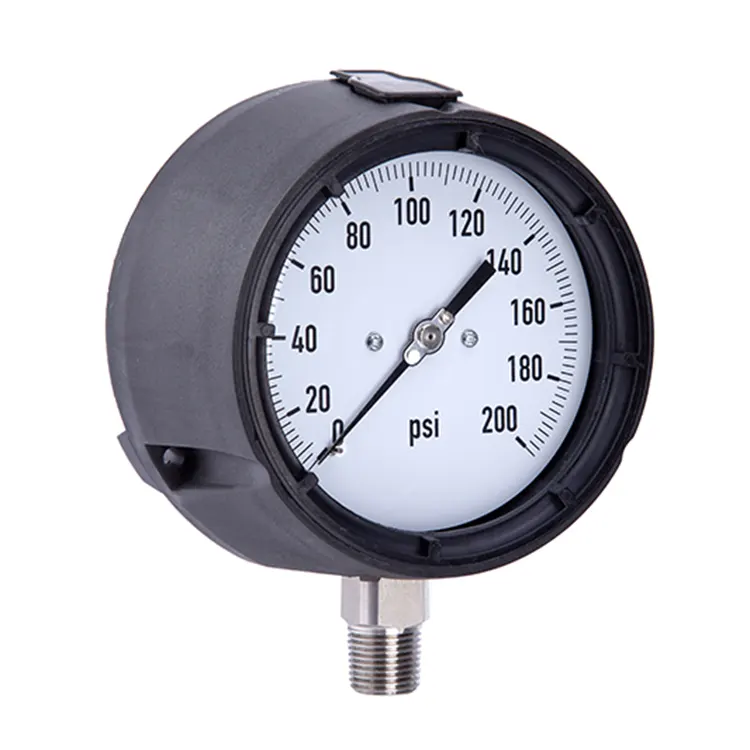
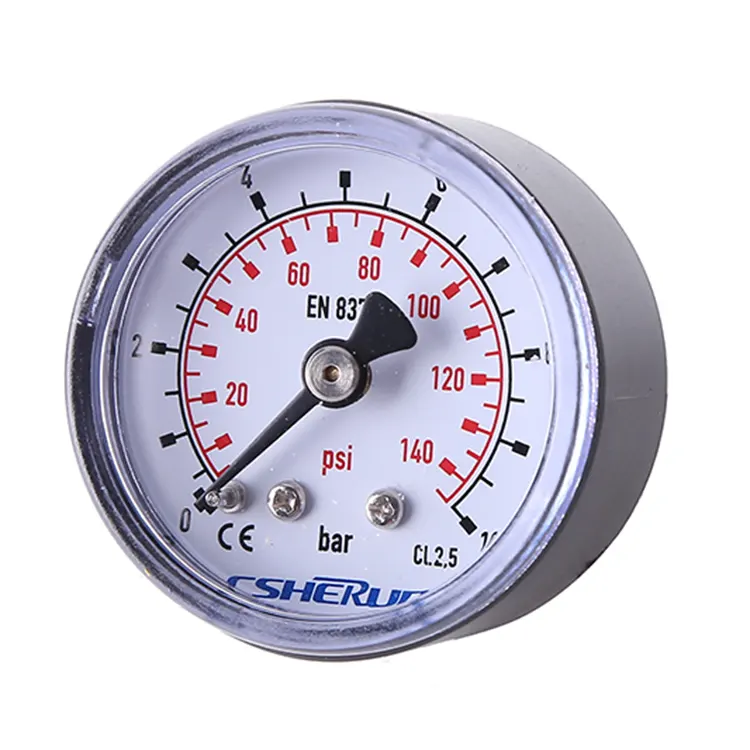
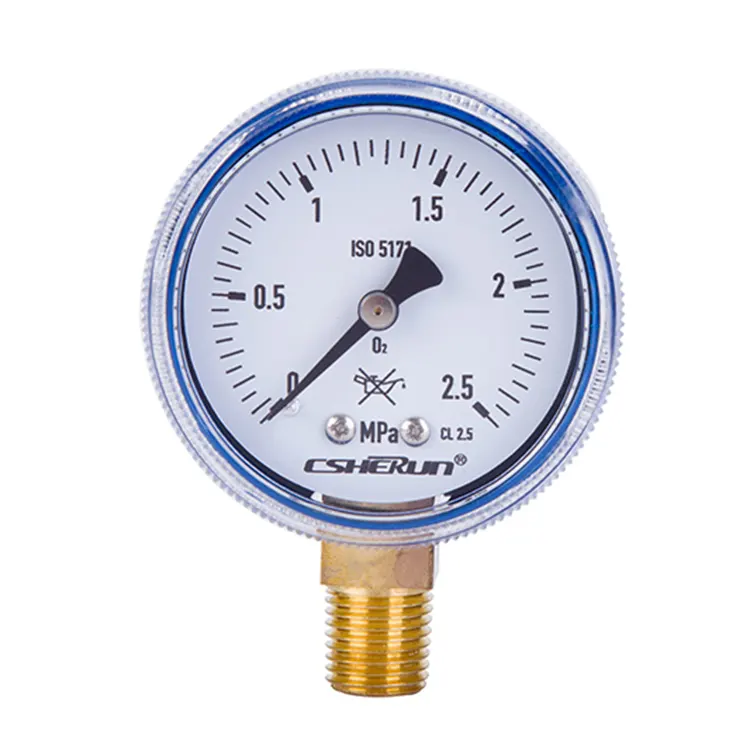
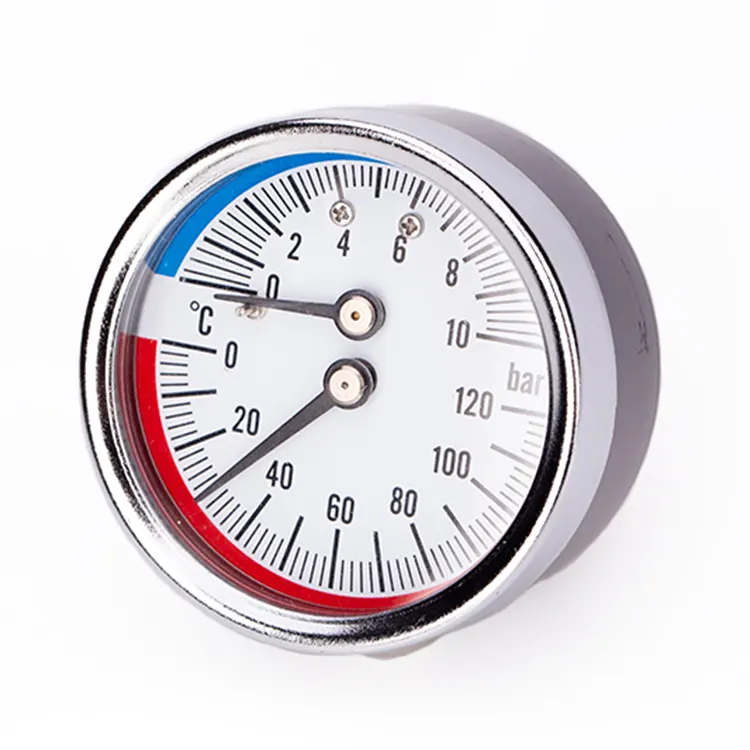
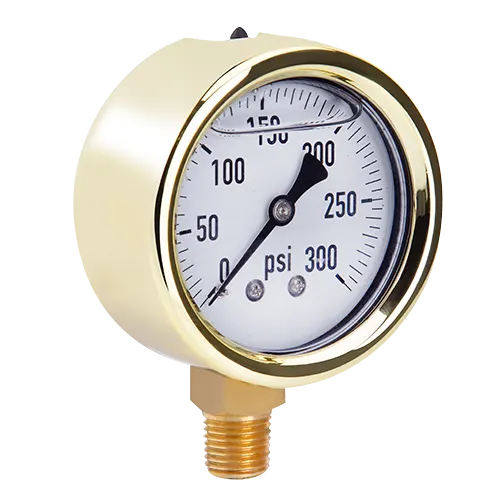
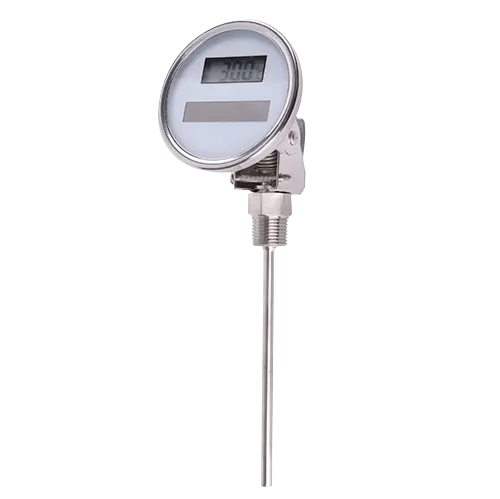
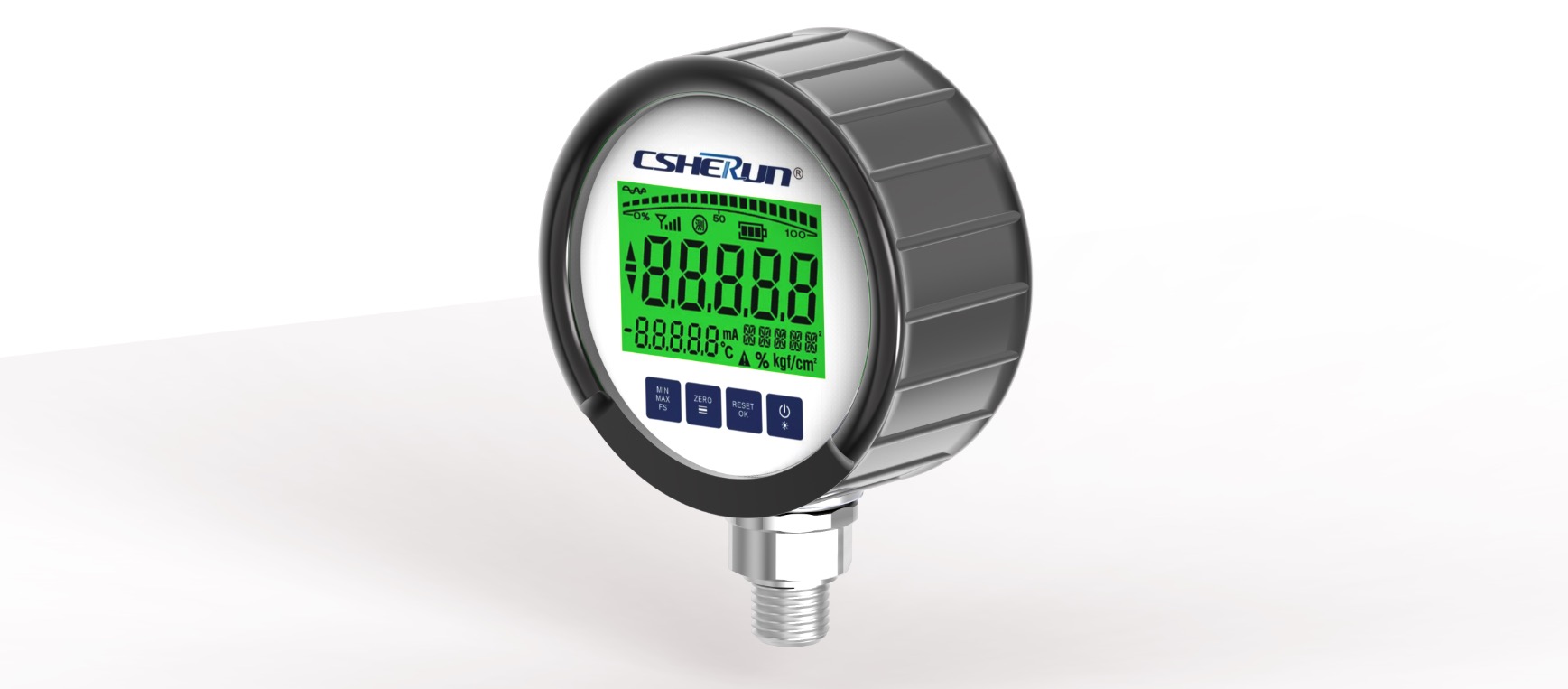
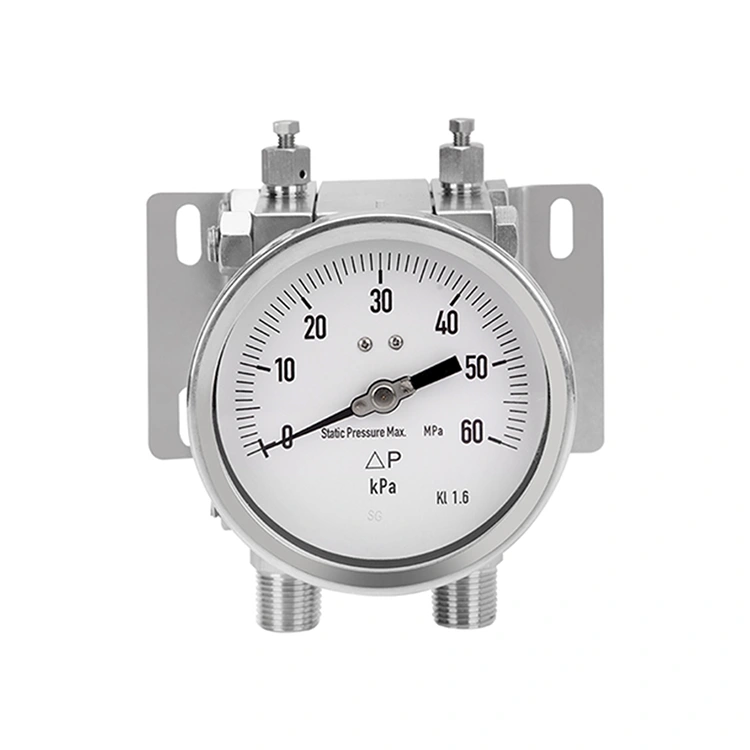
Bourdon Tube Pressure Gauge is a commonly used mechanical Pressure Measuring instrument.
1.Main components are:
Bourdon tube: Bourdon tube is the core component of the pressure gauge. It is a hollow metal tube bent into an arc shape, and its cross section is usually oblate or elliptical. One end is closed (called the free end), and the other end is welded to a fixed support (called the fixed end, i.e. the input end of the measured pressure). When the medium of the measured pressure enters the inner cavity of the Bourdon tube, the elliptical cross section of the Bourdon tube tends to become round under the action of the medium pressure, thereby producing an outward straightening expansion deformation, causing the free end of the Bourdon tube to displace.
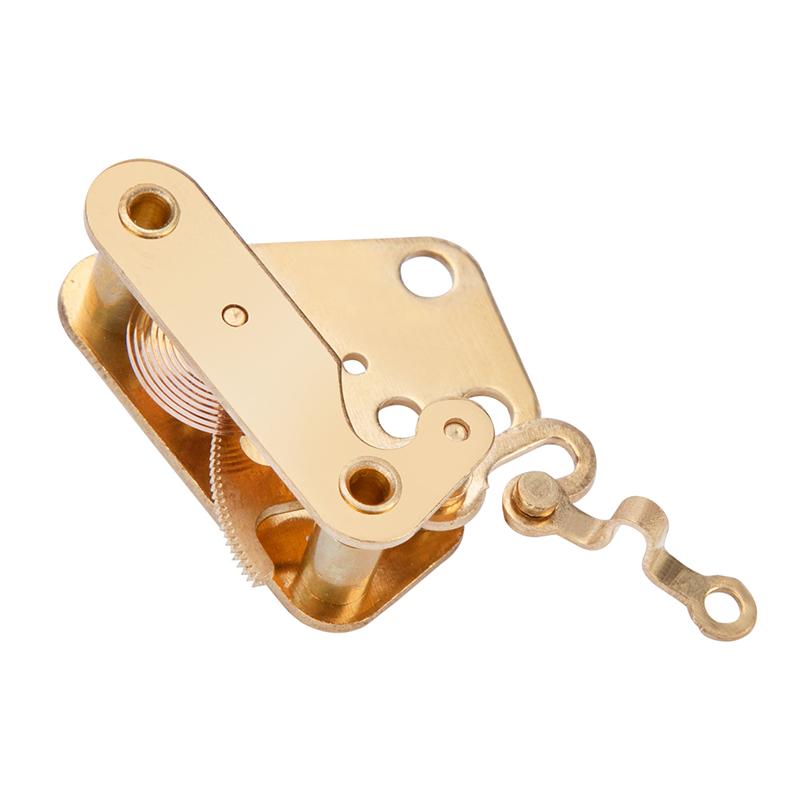
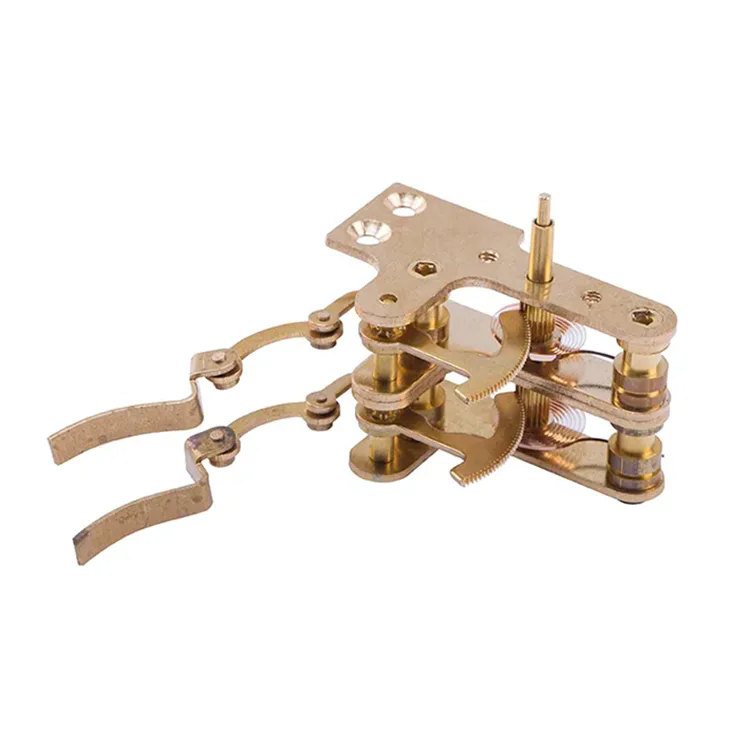
Gear transmission amplification mechanism: This mechanism consists of a pull rod, a sector gear, a center gear, etc., which is used to amplify the displacement of the free end of the Bourdon tube and transmit it to the pointer.
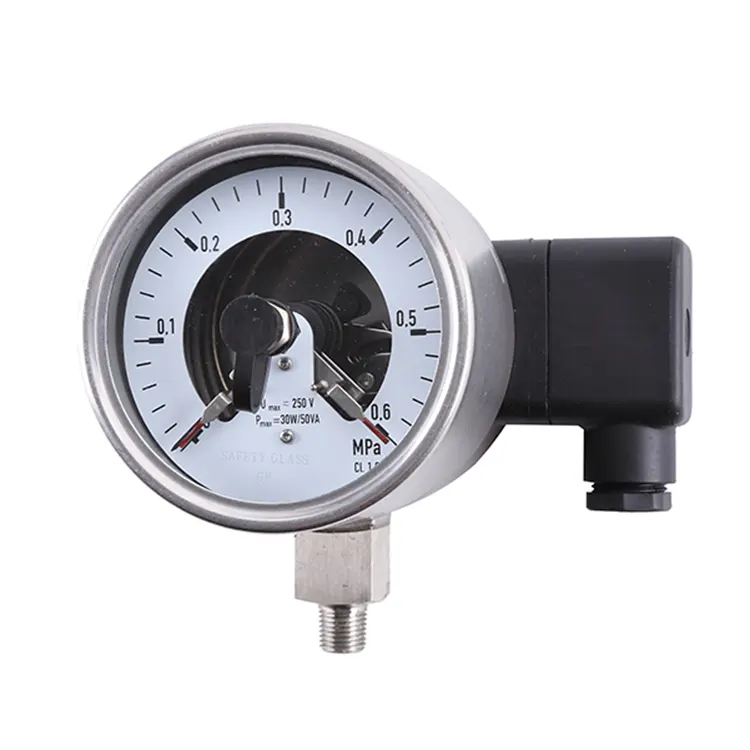
Pointer and dial: The pointer is driven by the coaxial center gear, and the value of the measured pressure (gauge pressure) is indicated on the dial.
Casing: It is used to protect the internal components of the pressure gauge and has a certain degree of sealing.
2. Working Principle
When the medium of the measured pressure enters the inner cavity of the Bourdon tube through the pipe joint, the Bourdon tube deforms under the action of the medium pressure, and its free end is displaced. This displacement is transmitted to the fan gear through the pull rod, and the fan gear drives the central gear to rotate. The pointer is driven by the coaxial central gear, indicating the value of the measured pressure on the dial. The size of the pointer rotation angle is proportional to the displacement of the free end of the Bourdon tube, that is, it is proportional to the size of the measured medium pressure.
3. Precautions for use
The Bourdon Tube Pressure Gauge should be used with the package intact and calibrated within the warranty period.
The outer shell and glass cover of the pressure gauge should be well sealed, and the valve, pressure pipeline and connector should be leak-free.
The pressure gauge should be placed vertically, and the pressure should not exceed 3/4 of the upper limit of the pressure gauge when measuring steady pressure; it should not exceed 2/3 of the upper limit of the pressure gauge when measuring pulsating and impact pressure.
When the measured medium has a corrosive effect on the parts of the pressure gauge, an isolation container filled with neutral liquid should be installed.
The Bourdon Tube Pressure Gauge should be inspected and repaired regularly to ensure its measurement accuracy and reliability.