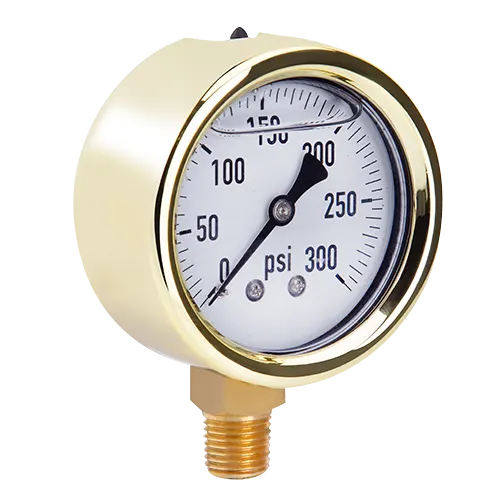
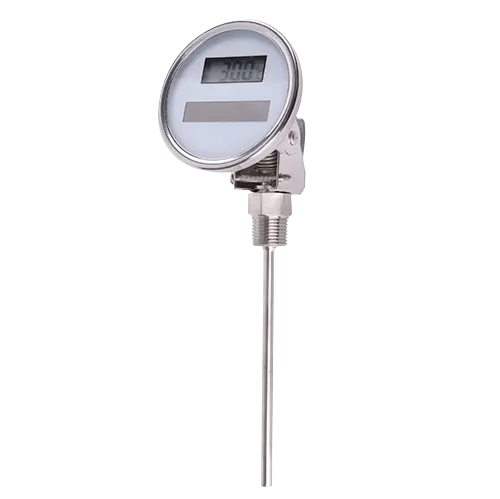
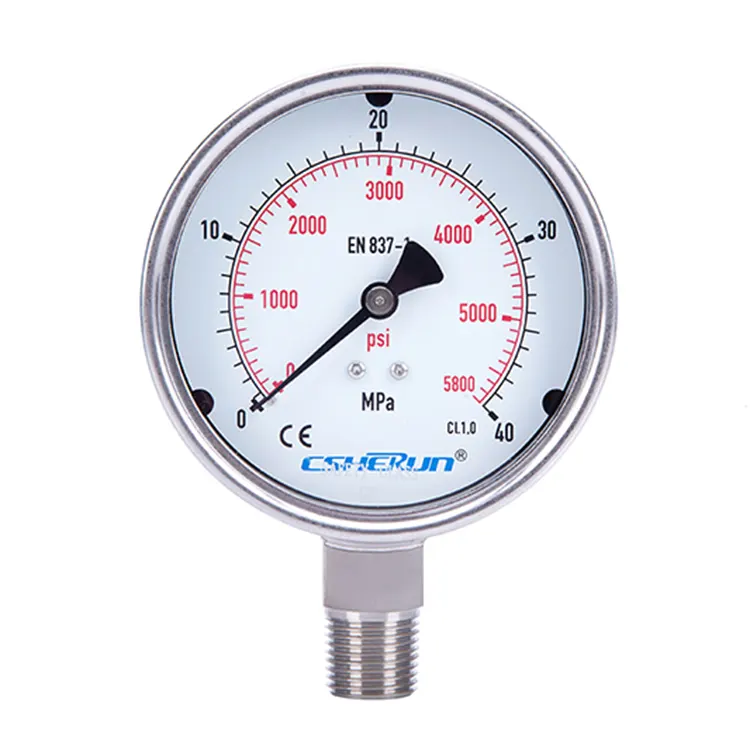
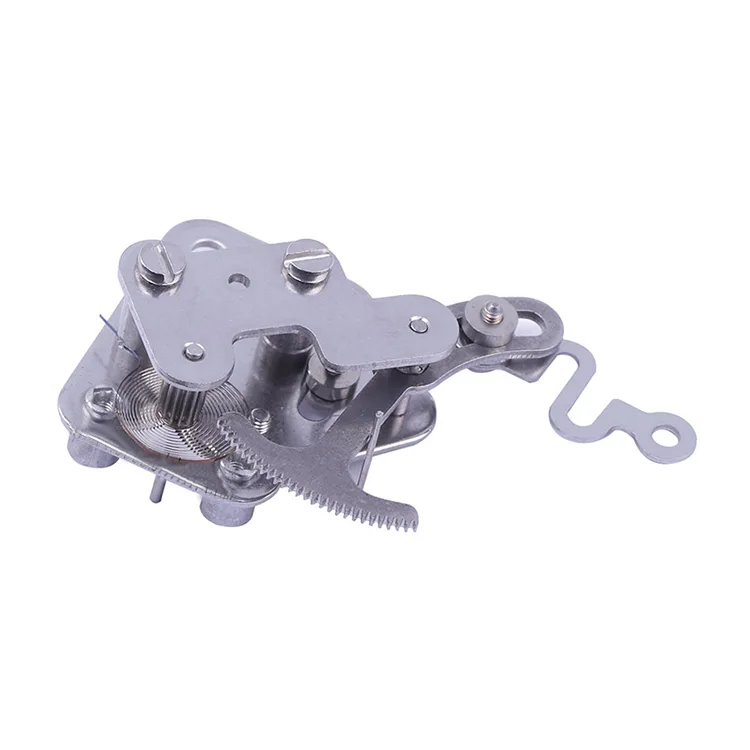
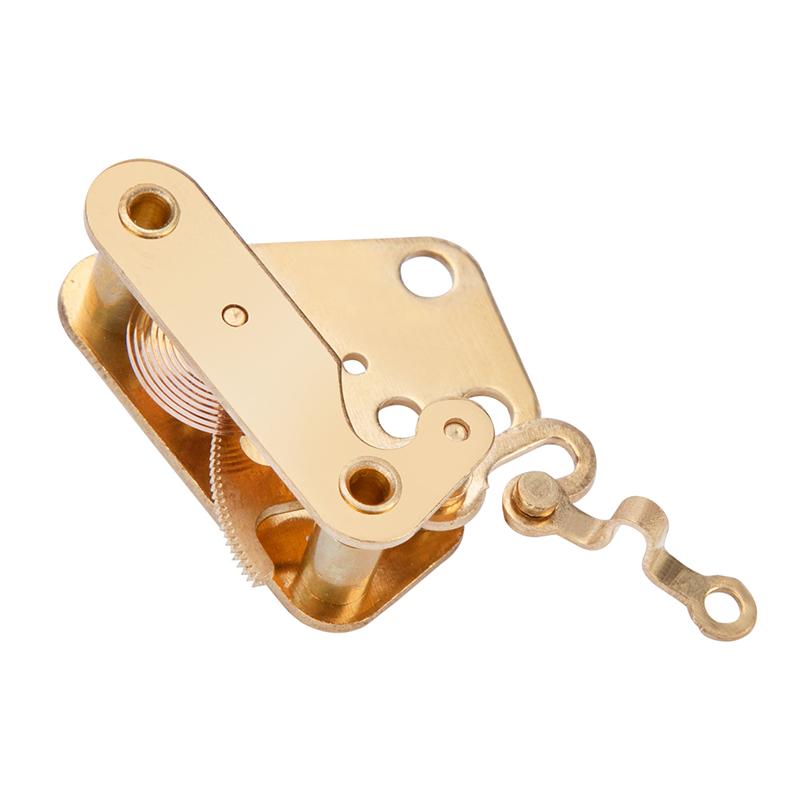
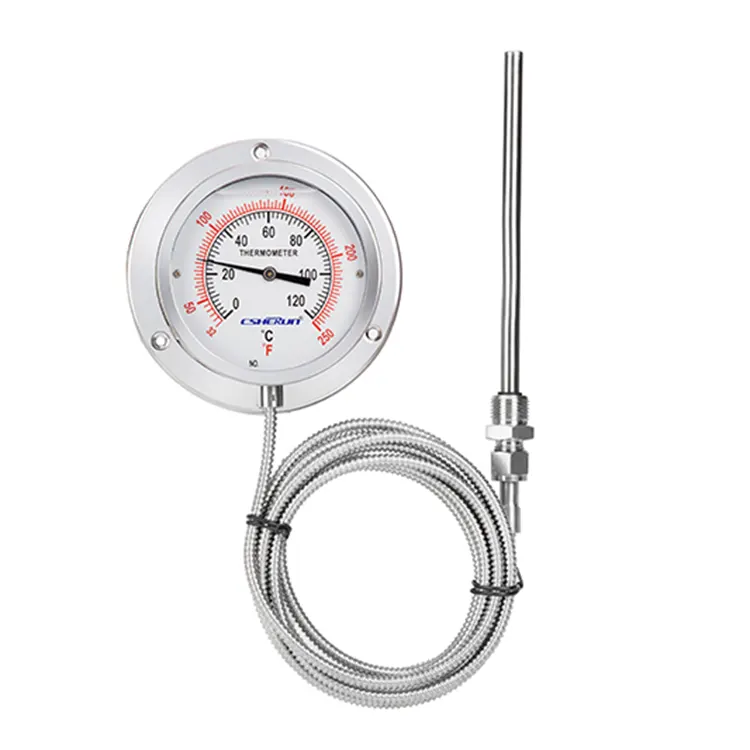
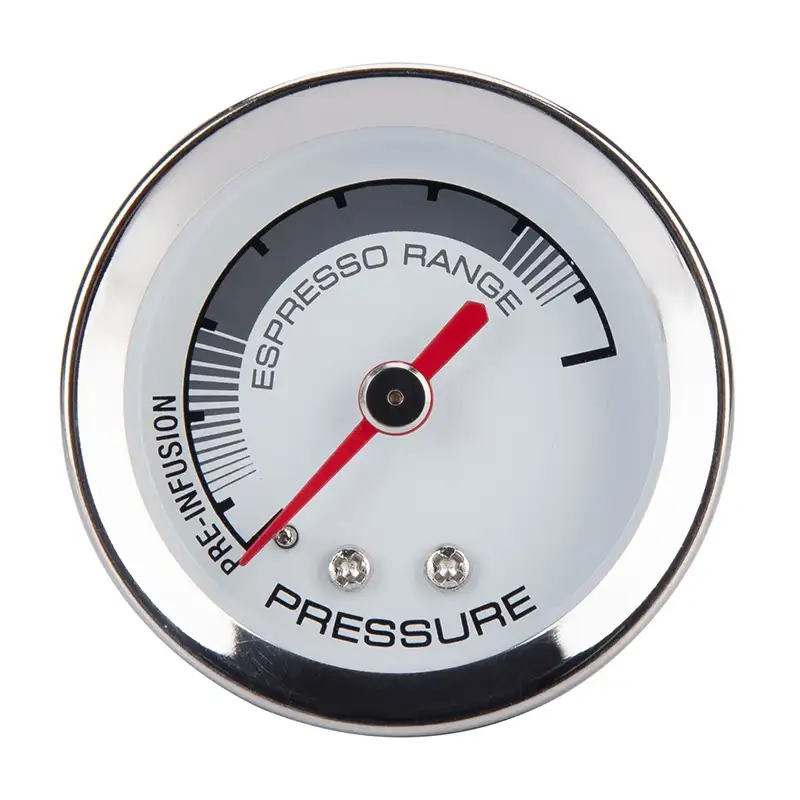
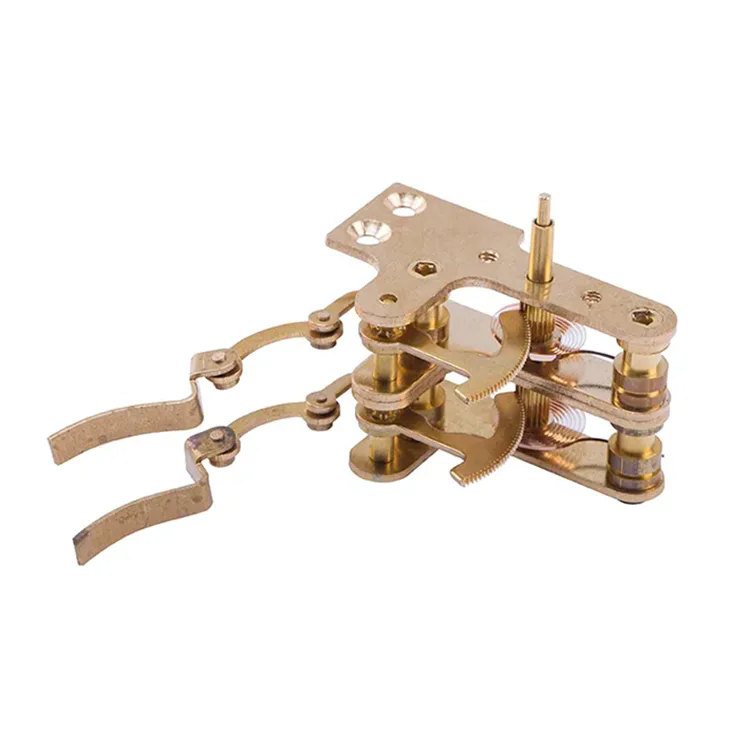
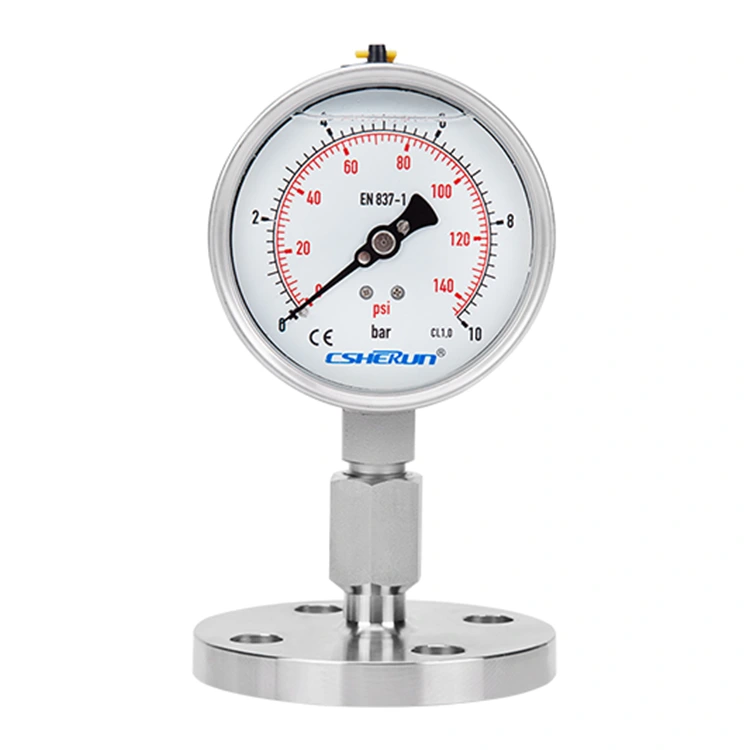
Industrial pressure measurement depends not only on the visible dial and pointer but also on the internal mechanism that converts pressure changes into readable movement. As industrial equipment becomes more precise, the internal construction of a measuring instrument has an increasingly important role in measurement consistency, response, and service reliability. Pressure Gauge Movement is therefore an important component in the development and performance of mechanical pressure instruments, particularly where stable indication and dependable operation are required.
For instrumentation manufacturers and industrial equipment suppliers, understanding the relationship between internal movement design and gauge performance can help improve product selection, assembly quality, and application suitability. A well-designed movement works together with the sensing element, pointer, dial, case, and connection structure to create a complete pressure indication system.

A mechanical pressure gauge must transform an applied pressure into a visible indication. The sensing element reacts to the pressure condition, while the internal mechanism transfers this mechanical change to the pointer. This process may appear simple from the outside, but reliable indication requires coordinated movement between several precision components.
The internal mechanism needs to respond smoothly without introducing unnecessary friction or instability. When the pressure changes, the movement should transmit the corresponding displacement efficiently so that the pointer can provide a clear reading on the dial. Consistent mechanical transmission is particularly important in industrial environments where instruments may be monitored frequently during normal operation.
These elements must operate as a coordinated system. Even when the sensing element performs correctly, poor transmission efficiency or excessive mechanical friction can influence the final indication. For this reason, internal component quality should be considered as part of the overall gauge design rather than treated as an isolated detail.
Industrial measuring instruments are often expected to operate continuously in environments where vibration, temperature variation, mechanical impact, and repeated pressure changes may occur. Under these conditions, the internal movement must maintain smooth mechanical action and consistent transmission performance.
Movement quality can influence several aspects of gauge operation. A mechanism with controlled motion can support stable pointer travel, while excessive friction may cause irregular movement or delayed indication. Proper engagement between internal components can also help reduce unnecessary mechanical wear during repeated operation.
For equipment used as part of a broader process monitoring system, clear pressure indication supports operators in understanding operating conditions. This is particularly relevant in mechanical equipment, process systems, hydraulic applications, pneumatic installations, and other industrial environments where pressure status needs to be observed during operation.
| Characteristic | Role in Gauge Operation | Application Value |
|---|---|---|
| Smooth transmission | Transfers mechanical displacement efficiently | Supports stable pointer movement |
| Low mechanical friction | Reduces resistance within the mechanism | Helps maintain responsive indication |
| Structural consistency | Maintains proper interaction between components | Supports repeatable performance |
| Material suitability | Provides appropriate mechanical strength | Contributes to service reliability |
| Assembly precision | Maintains correct component alignment | Helps support measurement consistency |
The performance of an internal gauge mechanism is closely connected with manufacturing precision. Small variations in component dimensions, alignment, surface condition, or assembly position can influence how smoothly the mechanism operates. Consistent manufacturing practices are therefore important when producing pressure instruments for industrial applications.
Material selection is another consideration. Internal components must provide suitable mechanical strength and dimensional stability for their intended operating environment. Depending on the instrument design and application, manufacturers may select different metallic materials or component configurations to achieve the required balance between durability, responsiveness, and manufacturing efficiency.
Assembly quality also deserves attention. Internal components need to be positioned correctly so that mechanical movement can be transmitted without unnecessary resistance. A controlled assembly process can help reduce variation between finished instruments and support more consistent indication characteristics.
Quality control is most effective when it is integrated into the manufacturing process rather than performed only at the final stage. This approach allows potential mechanical issues to be identified earlier and supports better control of finished product quality.
Pressure instruments are used across a wide range of applications, and the appropriate internal design depends on the operating environment. A gauge installed on a general mechanical system may face different conditions from an instrument used in process equipment or fluid handling systems.
Application conditions can include pressure fluctuation, vibration, temperature exposure, installation orientation, connection requirements, and frequency of operation. Understanding these conditions allows technical teams to evaluate whether a particular gauge construction is suitable for the intended service environment.
In each application, the gauge should be considered as part of the complete system. Installation conditions, connection compatibility, environmental exposure, and expected operating behavior all contribute to the final performance of the measuring instrument.
Industrial instrumentation continues to evolve as manufacturers respond to changing requirements for reliability, application flexibility, and production efficiency. Although digital measurement technologies are increasingly common, mechanical pressure instruments remain relevant because they offer direct visual indication and straightforward mechanical operation.
Modern development is not limited to changing the external appearance of a gauge. Internal mechanisms are also being refined through improvements in component design, material selection, manufacturing control, and assembly methods. These developments can help manufacturers create instruments that are more consistent and better suited to specific operating conditions.
At the same time, industrial customers are paying greater attention to compatibility and supply stability. A technically suitable instrument must also fit the intended equipment, installation environment, and maintenance requirements. This has increased the importance of suppliers that can provide a broad range of instrumentation products and coordinate different industrial components through an integrated supply chain.
A pressure gauge does not operate through one component alone. The sensing element, internal mechanism, pointer, dial, case, connection, and other structural elements must work together. This means that component sourcing and quality management can have a direct influence on the reliability of the final instrument.
For manufacturers and industrial solution providers, maintaining stable access to suitable components can support production continuity and product consistency. A supplier with experience across instrumentation and mechanical products can also provide broader coordination when projects require several categories of industrial goods.
Technical selection should begin with the intended application rather than the appearance of the finished gauge. The required pressure range, environmental conditions, installation method, expected operating frequency, and equipment compatibility should all be considered before determining the appropriate internal construction.
The mechanism should also be evaluated in relation to the complete measuring instrument. A high-quality internal component cannot compensate for unsuitable installation, incorrect component matching, or poor overall assembly. A balanced approach is therefore necessary when assessing mechanical pressure measurement products.
Long-term gauge reliability is influenced by the interaction between mechanical design, material quality, manufacturing precision, and operating conditions. The internal movement is one of the key mechanisms responsible for transferring pressure-induced displacement into a readable indication, making its structural quality important to the overall function of the instrument.
Repeated mechanical motion naturally places demands on internal components. Proper design and controlled manufacturing can help maintain smooth interaction between moving parts and reduce the effects of unnecessary resistance. This is especially valuable in industrial applications where instruments are expected to provide stable readings over extended periods of operation.
Maintenance practices can also contribute to service life. Regular inspection of the complete gauge, appropriate installation, protection from unsuitable environmental conditions, and timely replacement of damaged instruments can help maintain dependable pressure monitoring.
Reliable measurement supports more than simple data observation. Pressure readings can help operators understand equipment conditions, identify abnormal changes, and maintain appropriate process conditions. When measuring instruments perform consistently, they become a useful part of routine equipment management.
This is why internal engineering should receive attention alongside external product specifications. A professional instrumentation solution considers how individual components behave together and how the completed product will perform within its actual operating environment.
Changshu Herun Import&Export Co., Ltd. is a comprehensive import and export trading company based in Changshu, Jiangsu Province. The company focuses on international trade and supplies a broad range of industrial and commercial products, including pressure measuring instruments, temperature measuring products, nameplates, bolts, hex nuts, washers, and other related goods.
With a development philosophy centered on quality first and innovation-driven growth, Changshu Herun Import&Export Co., Ltd. continues to develop its capabilities in the instrumentation sector. Its broad product portfolio also reflects its ability to coordinate different categories of mechanical, hardware, electrical, and industrial products.
The company's business covers the import and export of goods and technologies in accordance with applicable requirements. Its extensive commodity range includes measuring instruments, mechanical equipment and parts, hardware and electrical appliances, electrical equipment, auto parts, building materials, textiles, metal materials, and other products. This broad scope provides a foundation for supply chain integration and international market service.
As industrial measurement requirements continue to evolve, professional product sourcing and quality-oriented supply management remain important. Changshu Herun Import&Export Co., Ltd. combines its international trade experience with a diverse industrial product portfolio to support customers seeking dependable instrumentation and related components. Its continued focus on quality, innovation, and supply integration positions the company to serve changing requirements across global industrial markets.